AI & Systems
Context-Aware AI Walking Meditation (Smart Glasses)
Designed an AI-driven walking meditation experience that dynamically adapts guidance based on environmental context detected through smart glasses.
- Contextual prompt architecture: structured prompt engineering translating environmental signals into psychologically coherent guidance
- Latency-aware experience design: interaction pacing and response framing designed to accommodate real-world model delays
- Hallucination mitigation through design: constrained prompting, environmental grounding and structured output formats
- Evaluation programme: large-scale UX testing and comparative benchmarking of latency and contextual accuracy against baseline AI models
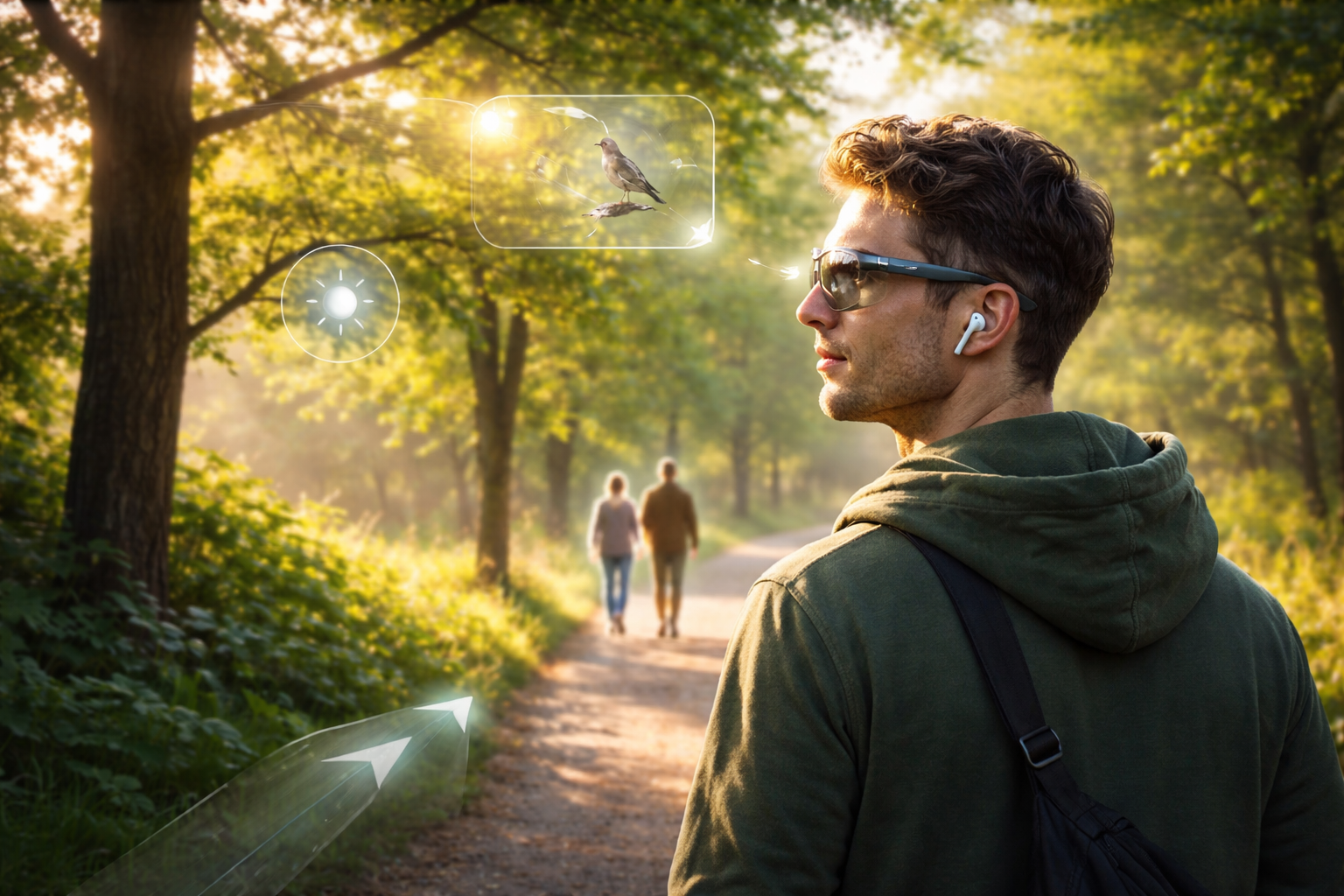
Context-aware AI pipeline translating environmental signals into real-time guided meditation.
AI-enabled Knowledge Base
Developed a design tool integrating academic literature, internal experimental findings and structured LLM reasoning into a unified knowledge layer for product teams.
- Multi-source synthesis: research evidence, internal data and model reasoning combined into structured outputs
- Accuracy controls: constrained prompting and evidence grounding to reduce hallucination risk
- Design translation layer: converts psychological principles into actionable product recommendations
- Team-aware guidance: suggests feasible designs aligned to available developer and artist skill sets
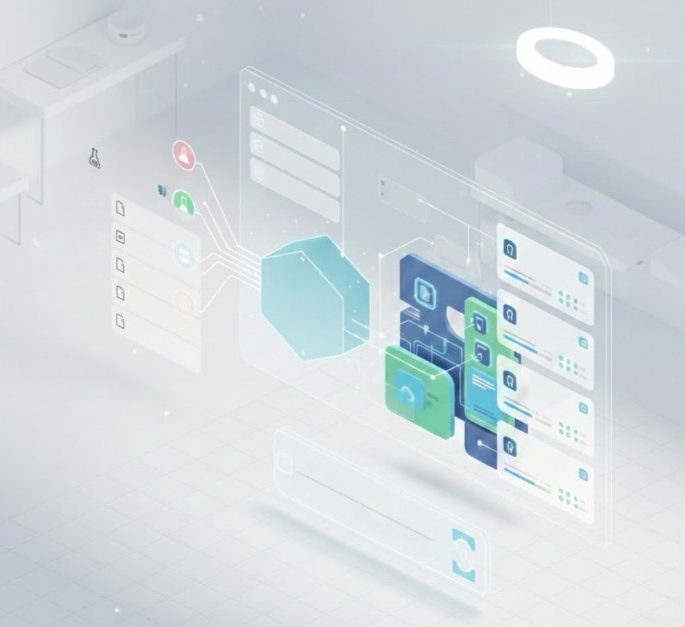
Research evidence, internal data and LLM reasoning integrated into structured design intelligence.
Categorisation Engine
Built a system to automatically analyse and tag VR experiences at scale, turning design features into structured, analytical data.
- Design dimensions tracked: colour, visual complexity, cognitive load, music, pacing, scene changes, interactivity and more
- Automated analysis: extracts visual and audio features across large content libraries
- Consistent framework: standardised categories allowing direct comparison between experiences
- Scalable system: updates automatically as new experiences are added
- Connected to user data: links design features to engagement and performance metrics
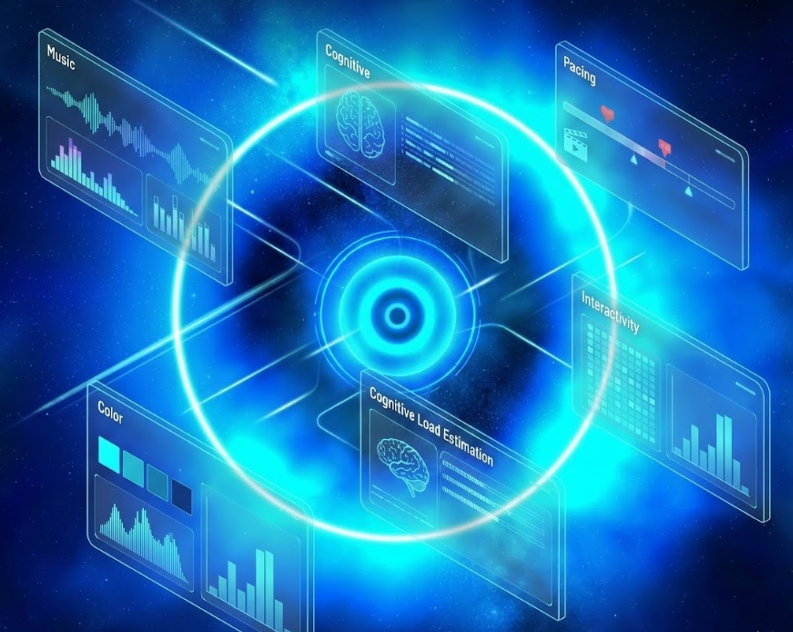
Automated classification of immersive design features into structured data.
Real-Time Voice Analysis for Soft Skills Training
Contributed to the development of a real-time voice analysis system embedded within soft skills training applications, enabling users to receive live feedback on their communication performance.
- Emotional voice analysis: detection of vocal cues linked to a person's emotional state
- Sentiment analysis: speech-to-text conversion followed by natural language sentiment evaluation
- Live performance feedback: real-time insights delivered during presentations and difficult conversation simulations
- Behavioural integration: feedback designed to encourage immediate performance adjustment and skill refinement
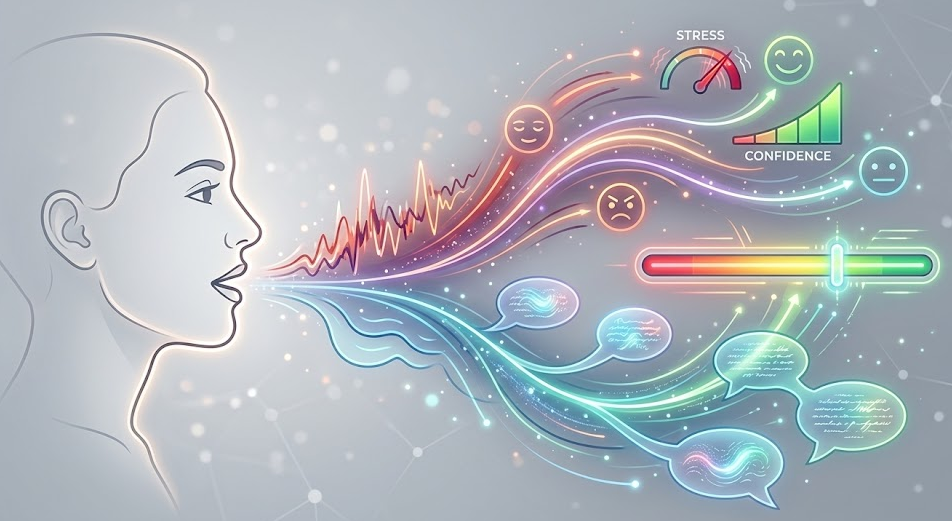
Real-time emotional and sentiment analysis integrated into behavioural training environments.