Product & Experience Design
State-Driven VR Experience Design
I’ve led the design of VR experiences intentionally built to shift specific cognitive and emotional states. Each experience was grounded in established psychological frameworks and tied to clearly defined outcome measures.
- Meditation frameworks: mindfulness, focused attention and breath-guided regulation
- Flow architecture: calibrated challenge, feedback loops and skill–difficulty balance
- Casual gameplay mechanics: light agency and reward to sustain engagement
- Hypnotic techniques: pacing, suggestion and attentional narrowing
- Rhythmic light stimulation: visual entrainment for energy and alertness
This portfolio spans consumer wellbeing, entertainment, and deployment in workplace and educational settings.



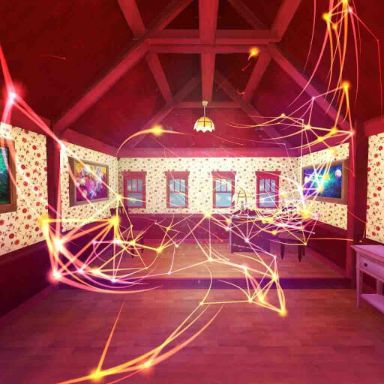

Selected Liminal experiences targeting focus, calm, awe, energy and pain relief.
Behavioural Skills & Immersive Training Design
Led the design and delivery of behavioural training experiences across web and VR platforms, focused on interactive and measurable skill development.
- Conflict management training (web): scenario-based modules for managers, built around decision-making, feedback loops and behavioural consequences
- Immersive presentation skills training: VR simulations providing live vocal performance feedback on pace, tone and projection
- Difficult conversations training: avatar-driven simulations allowing users to practise high-stakes workplace dialogue in psychologically safe environments
- Performance analytics: behavioural tracking and feedback to support measurable improvement
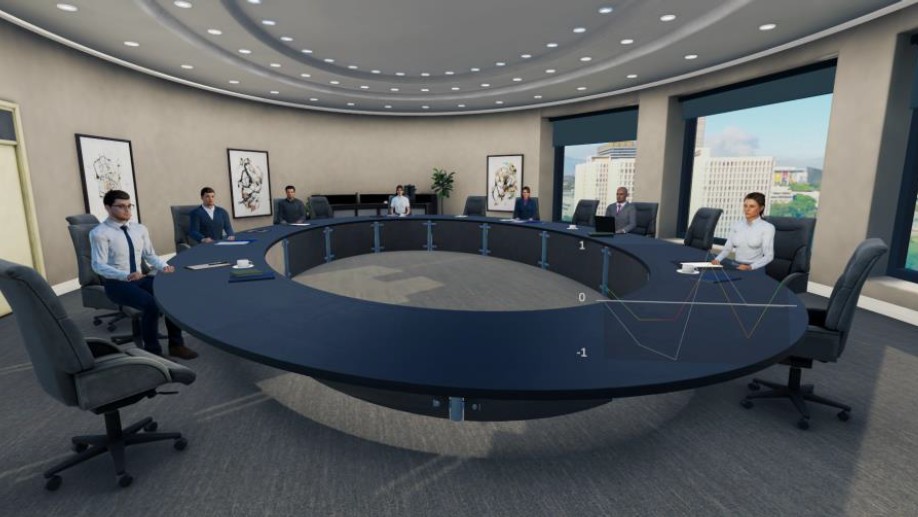
Liminal's immersive training experience for presentation skills.
VR-Native Cognitive Assessment Design
Developed and implemented bespoke attention tasks adapted specifically for immersive contexts, enabling objective measurement of cognitive performance alongside experiential interventions.
- Go/No-Go Task (Sustained Attention): continuous-response paradigm adapted for VR to assess vigilance and inhibitory control
- Moving Flanker Task (Selective Attention): dynamic spatial adaptation of the classic flanker paradigm to measure interference control
- Immersive integration: spatialised stimuli, motion variables and environmental distraction embedded within task structure
- Scalable deployment: virtual lab studies and platform testing with thousands of participants
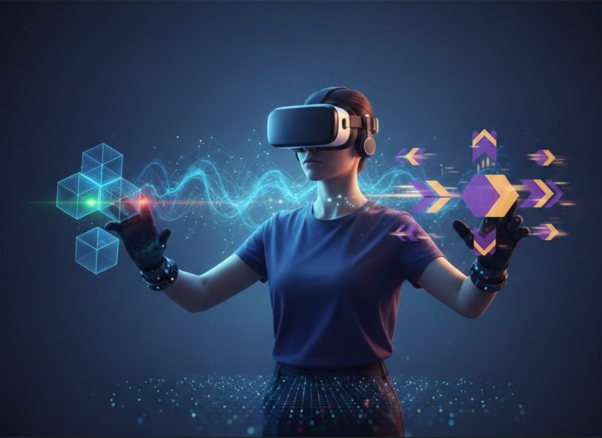
VR adaptations of sustained and selective attention assessments.